A grease stain on a leather bag, a dark mark on shoes: the common reflex is to look for a powerful chemical product. Before the era of industrial detergents, artisans used a much simpler animal substance, beef bile. This bile, collected during the slaughter of cattle, has degreasing and cleaning properties that make it a formidable ally for leather.
Lipases and bile acids: the mechanism that dissolves fats from leather
Have you ever noticed that an oil stain on leather resists water and regular soap? This is because fats cling to the collagen fibers of leather due to chemical affinity. Beef bile contains bile acids and lipases that break this bond.
Bile acids act as natural surfactants. They surround fat molecules, detach them from the surface, and make them soluble in water. Lipases, on the other hand, cut fats into smaller fragments that are easy to rinse away.
This dual mechanism explains why beef bile removes stains that other cleaners leave intact. To understand how beef bile is collected from the gallbladder of cattle, it is important to know that this bile is a by-product of slaughter, collected and filtered before being packaged in liquid form or incorporated into solid soap.
Leather also benefits from the proteases present in bile, enzymes capable of breaking down protein residues like blood or sweat embedded in a leather jacket collar.
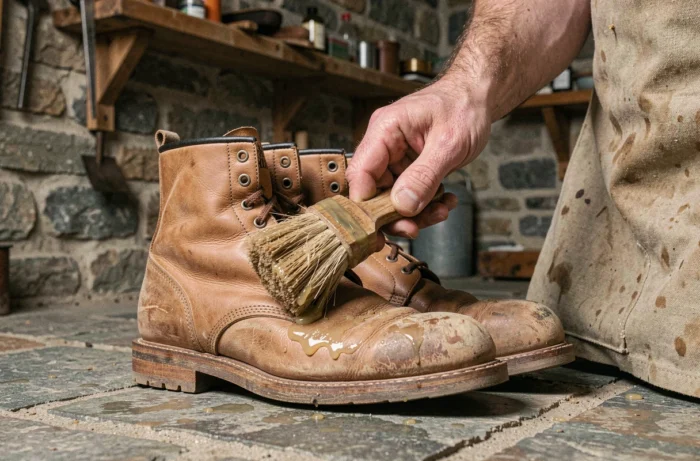
Solid soap or liquid bile: choosing the right form for leather
Beef bile comes in two main formats, and the choice depends on the type of leather to be treated.
Solid beef bile soap
The most common format combines bile with a classic soapy base (soda and vegetable oils). The bar is rubbed directly onto the stained area, which has been slightly moistened beforehand. This format is well-suited for thick and robust leathers: riding saddles, belts, hiking shoes.
The solid soap allows for precise control of the treated area. It is applied only where necessary, without risking wetting the entire item.
Pure or diluted liquid bile
The liquid bile is dosed drop by drop. It is mixed with warm water to obtain a light solution, suitable for fine or delicate leathers: soft leather goods, gloves, lambskin. A few drops on a soft cloth are enough to clean without saturating the material.
- Thick leather (saddle, travel bag, belt): prefer solid soap, rubbed dry and then rinsed with a damp cloth
- Fine or dyed leather (handbag, wallet, jacket): opt for diluted liquid bile, applied with a microfiber cloth
- Patented leather or exotic leather (crocodile, ostrich): do not use beef bile, as surface finishes may dull or peel off
Application protocol on leather: steps to avoid damage
Beef bile is effective, but if misused, it can leave rings or dry out the leather. Here is the sequence to follow.
Start by dusting the leather with a soft brush. Dust particles mixed with bile would form an abrasive paste that scratches the surface.
Lightly moisten the area to be treated. On dry leather, the bile penetrates too quickly and can create a stain darker than the original. A very slightly damp leather absorbs the product evenly.
Apply the bile (solid or liquid) in circular motions, without pressing. Let it sit for a few minutes, then wipe with a clean, damp cloth. Repeat if the stain persists, rather than forcing it on the first pass.
The last step, often forgotten: nourish the leather after cleaning. Bile dissolves fats, including those that soften the leather. A balm or natural wax (beeswax, neatsfoot oil) restores flexibility and protection. Without this step, the leather dries out and cracks.
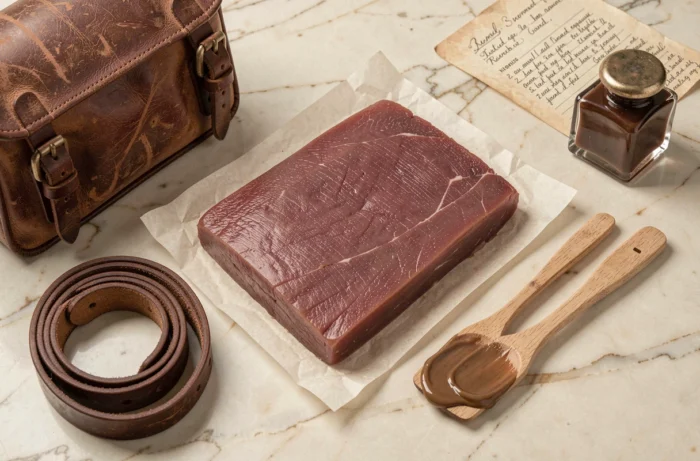
Environmental claims and beef bile: what European regulation changes
Many retailers present beef bile soap as a “natural” or “eco-friendly” product without further details. This habit will pose problems.
The European directive 2024/825, known as “Empowering Consumers for the Green Transition,” prohibits vague and undocumented environmental claims for cleaning products. Starting September 27, 2026, a manufacturer of beef bile soap will no longer be able to write “100% eco-friendly” or “environmentally friendly” on its packaging without providing verifiable evidence.
In practical terms, it will be necessary to document the biodegradability of surfactants, the origin of animal materials, and the management of by-products. For the consumer who buys beef bile to maintain their leather, this means that labels will become more precise and reliable in the coming months.
Beef bile remains a by-product of slaughter: it valorizes a material that would otherwise be discarded. This point works in its favor within a regulatory framework that demands transparency rather than vague marketing.
Beef bile is neither a miracle product nor an outdated curiosity. Its enzymes and bile acids correspond exactly to the problem posed by greasy stains on leather. The right format, the right action, and nourishing the leather after cleaning: three simple parameters that separate successful maintenance from damaged leather.