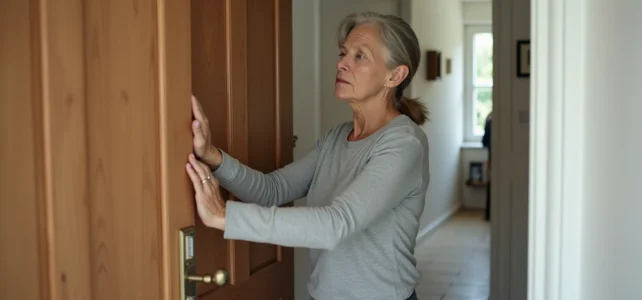
When a wildfire approaches a populated area, the first instinct may seem counterintuitive: stay at home and close everything. Firefighters repeat this every summer; a house with closed openings withstands fire much better than a ventilated one. Closing doors and windows deprives the fire of the airflow it needs to rush inside. This simple action radically changes the behavior of the flames and heat around the building.
Why air circulates poorly in a house fire
A fire needs three elements to spread: fuel, heat, and oxygen. When a window remains open, it directly provides the third element. The airflow created between one opening and another part of the home generates a draft effect that accelerates the spread of flames.
Have you ever noticed that a barbecue lights better when you blow on it? The principle is the same on a house scale. An open door between two rooms creates a corridor for fresh air. The fire follows this corridor.
Closing a simple interior door cuts off this supply. The closed room turns into a confined space where the amount of oxygen decreases rapidly. The fire slows down, sometimes suffocates. To better understand how to protect your home from fires using this compartmentalization logic, one must also consider what happens with mechanical ventilation.
MVHR and air conditioning: the forgotten air inlets during a fire
Closing windows and doors is not enough if the MVHR continues to run. This is a point that recent recommendations highlight: an active MVHR sucks in outside smoke directly into the home, even when everything seems hermetically sealed.
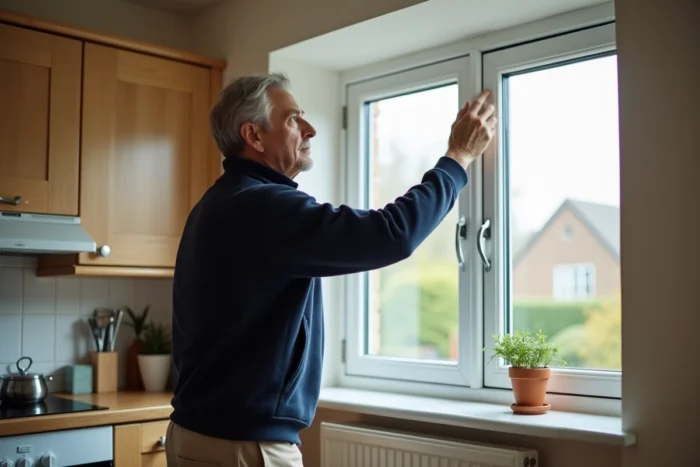
Air conditioning poses the same problem. In standard mode, it draws some air from outside. Fine particles from wood combustion pass through standard filters, which are not designed to trap them.
Here are the actions to take on your ventilation equipment when a fire breaks out nearby:
- Turn off the MVHR at the dedicated circuit breaker or, if not possible, at the main electrical panel if you cannot isolate it
- Switch the air conditioning to recirculation mode (only recycling indoor air) to prevent any outside air intake
- Seal the ventilation grilles with damp cloths if you do not have access to the ventilation controls
- Close chimney flaps and any wood stove ducts, which are additional entry points for smoke
These actions transform the home into a temporary airtight chamber. Indoor air quality remains acceptable for several hours, much longer than one might think.
When to reopen windows after a nearby fire
This is the least well-addressed question in prevention guides. The smoke plume has disappeared, and the smell has faded. Many people open everything immediately. It’s too soon.
The absence of visible smoke does not mean that the outside air has become healthy again. PM2.5 fine particles remain suspended long after the plume has dissipated. Doctors recommend relying on official air quality indices (AQI) published by regional health agencies, rather than what one sees or smells from their window.
The ARS advises to ventilate only when local air bulletins and prefectural guidelines allow it. In practice, this may represent a much longer delay than the visual end of the fire.
For individuals suffering from heart or respiratory conditions, this caution is even more pronounced. Fire smoke contains irritating compounds that exacerbate asthma, chronic bronchitis, and heart failure, even at low concentrations.
Compartmentalizing rooms: the most underestimated indoor safety gesture
Closing the front door and windows protects against outside fire. Closing interior doors protects against flames that may have already entered the home. These are two distinct logics, and the second is rarely explained.
When a fire starts in a room, each closed door between that room and the rest of the home delays the spread. The fire takes significantly longer to cross a closed door than an open hallway. This time gained can make the difference between a calm evacuation and a panic situation.
The principle also works at night. Sleeping with the door closed slows the progression of a nighttime fire, allowing more time for the smoke detector to alert occupants in other rooms.
Preparing your doors and windows before fire season
A few simple checks improve the airtightness of the home against smoke and radiant heat:
- Check that the seals on your windows are not cracked or detached, as these are the first points of entry for smoke
- Ensure the complete closure of your roller shutters or hinged shutters, which add a thermal barrier against the radiation of a nearby fire
- Test the proper functioning of all interior door handles to ensure quick closure in an emergency
Closed shutters significantly reduce the heat transmitted by radiation through the glazing. In areas exposed to vegetation fires, this preventive action is as useful as clearing brush.
Smoke detector and fire extinguisher: the complement to closed doors
Closing openings slows the fire, but does not prevent it from starting inside. A functional smoke detector remains the first line of alert. Check its batteries at least twice a year, ideally when the clocks change.
A water or powder extinguisher, placed in an accessible location (entrance, kitchen), allows for intervention on a small fire before it grows. Extinguishing a nascent fire takes less than a minute with the right equipment, compared to major damage after a few minutes without intervention.
Calling for help remains the top priority. Even if the fire seems controlled, firefighters must check that no hot spots remain in the walls or roof. A rekindling of fire several hours after apparent extinguishment is a common scenario that only professionals equipped with thermal cameras can rule out.