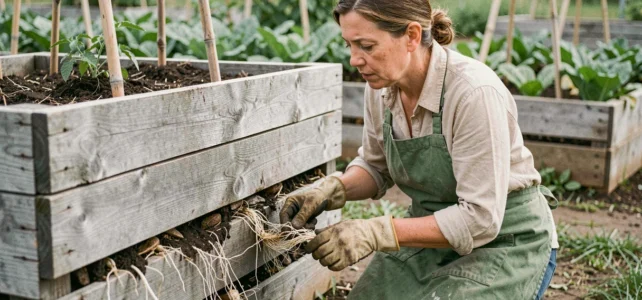
A composter placed directly on the ground in the vegetable garden often ends up attracting the roots of nearby plants. They rise into the pile, colonize the decomposing material, and complicate the harvest of clean compost. Preventing this phenomenon requires some choices in placement and management that can be implemented from the first season.
Why roots colonize the composter in the vegetable garden
The composter is generally placed near the crops to limit back-and-forth trips. The problem is that the roots of vegetables, weeds, or nearby shrubs detect the concentration of nutrients and naturally migrate towards this source. A pile rich in nitrogen and constantly moist acts like a magnet for any root system within several meters.
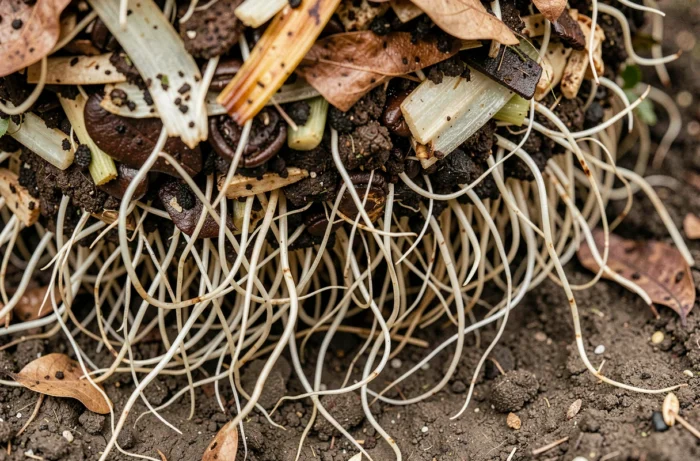
The phenomenon accelerates when the composter is in direct contact with bare soil. Without a physical barrier, roots penetrate from the bottom and settle into the lower layers of the compost, where the material is most mature. A dense tangle is then found at the time of sifting, making the compost difficult to use as is.
When we add too much compost in the vegetable garden with Info Jardinage, we find that the excess of undecomposed organic matter further worsens root attraction. The dosage and location of the composter go hand in hand.
Root barrier and composter placement
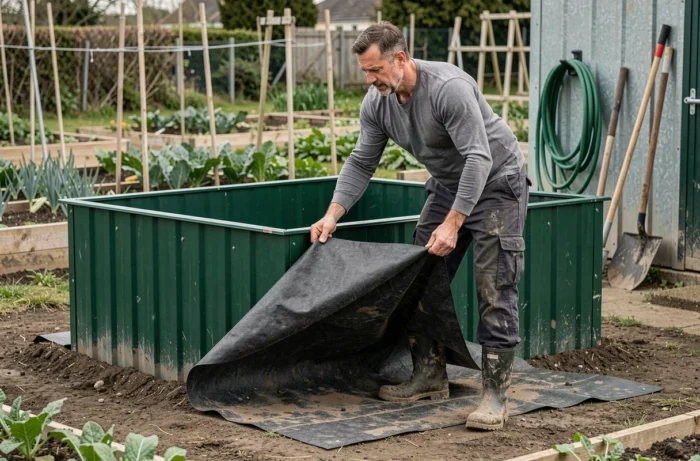
The most reliable solution to cut off access to external roots remains the physical barrier under the composter. A thick geotextile or a fine mesh wire grid can be used at the bottom of the bin. The grid has the advantage of allowing water and soil microorganisms to pass through while blocking the roots.
The choice of location is as important as the barrier itself. Placing the composter away from hedges, fruit trees, and the most greedy crop beds (squash, tomatoes) reduces root pressure. A space of at least two meters between the edge of the composter and the first rows of vegetables significantly limits the risk.
Some practical criteria for properly positioning the composter:
- Avoid the proximity of trees or shrubs whose roots extend well beyond the visible crown
- Prefer a slightly elevated soil or a perforated slab to prevent water stagnation that attracts shallow roots
- Orient the bin in partial shade to maintain moisture without creating an environment that is too cool, where decomposition slows down and gives roots more time to settle
Managing the pile to discourage rooting
A compost that heats properly decomposes quickly, and a rapid decomposition cycle leaves less time for roots to colonize the pile. To achieve this, maintain a balance between nitrogenous materials (peels, fresh clippings) and carbonaceous materials (dead leaves, mulch, brown cardboard). A ratio of about two parts dry materials to one part wet waste promotes effective temperature rise.
Turning the compost regularly, every three to four weeks, disrupts the roots trying to settle. The mixing breaks young root shoots before they form a dense network. It is also the best way to distribute moisture and oxygen throughout the pile.
A point often overlooked: never let compost “sleep” for several months without intervention. An abandoned pile, especially at the back of the garden, becomes a rooting ground for nearby perennials. If you cannot turn the compost for a while, covering the top with a tarp at least limits the progression of roots from above.
Roots of perennials and invasive plants in the compost
Two situations must be distinguished. Roots coming from outside (those of neighboring plants that colonize the pile) only pose a mechanical problem. In contrast, fragments of roots from invasive plants intentionally added to the compost represent a risk of regrowth upon removal.
Bindweed, couch grass, or dock can regrow from a simple piece of rhizome if the compost temperature has not been high enough to destroy them. Returns vary on this point depending on the type of composter and local climate, but the rule of caution remains simple: those roots go in the trash or into a closed bucket of water for several weeks before being reintroduced.
Sorting green waste before composting: what to include and what to avoid
Preventing roots in the compost also involves what you deposit in it. Weeds pulled up with their roots deserve systematic sorting before going into the bin.
- Annuals without mature seeds (chickweed, starwort) can be composted without concern, roots included
- Perennials with creeping rhizomes (couch grass, bindweed, creeping cinquefoil) should be dried for several days in the sun before being added, or excluded from the composter
- Roots of diseased solanaceous or cucurbitaceous plants (downy mildew, advanced powdery mildew) should be discarded to avoid reintroducing pathogens into the vegetable garden soil
- Large woody roots decompose slowly and create compact areas in the pile, hindering temperature rise
A quick two-minute sort with each addition avoids hours of untangling when it comes time to retrieve the mature compost. You gain in compost quality and reduce the risk of spreading weeds in the crop beds.
Compost remains one of the best amendments for the vegetable garden soil, provided you keep control over what goes into the bin and what grows beneath. A barrier at the bottom, thoughtful placement, and regular mixing are enough to produce clean compost without spending hours extracting roots from the sieve.