A hand-printed t-shirt that bleeds from the first wash is a common disappointment. The problem rarely comes from the design or color chosen: it’s the fixation of the ink on the fabric that hasn’t been done correctly. Too low a temperature, too short a curing time, ink unsuitable for the substrate, the causes are specific and, for the most part, easy to correct once understood.
Time-temperature window: the parameter that guides forget
Fixing the ink on a textile is not just about “ironing the design.” Each type of ink has a specific curing range, below which the binder does not fully polymerize. The result: an impression that seems solid when dry, but degrades upon contact with water and mechanical friction from the drum.
For water-based inks used in textile screen printing, manufacturers specify a curing temperature of 150-160 °C for 2 to 3 minutes to ensure complete cross-linking of the binder. Below this threshold, resistance to washing and dry cleaning drops significantly.
Have you ever noticed that the same design holds better on one fabric than another, even though the process seemed identical? The difference often comes down to a few degrees or a few seconds of pressing less. An infrared thermometer on the surface of the fabric (not on the press plate) allows you to check the actual temperature at contact.
Discover more fabric ink techniques on Home Dream to delve deeper into these settings according to your equipment.
Plastisol ink, water-based ink, DTF: choose according to the fabric and use
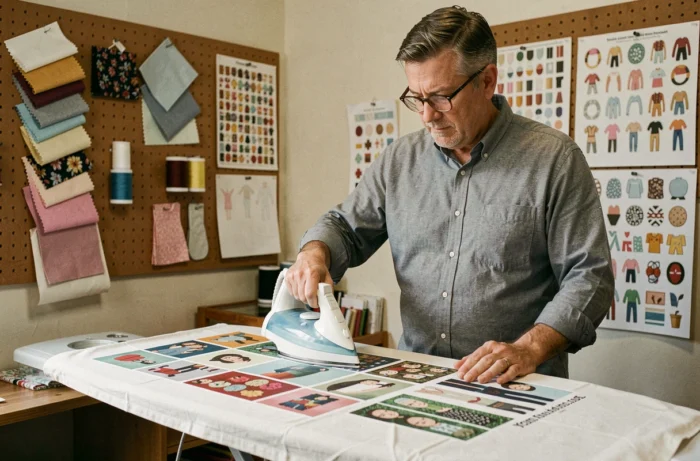
The choice of ink determines both durability and the fixation method. Comparing the three most common families helps avoid compatibility errors.
Plastisol ink for screen printing
This is the historical reference in professional textile printing. Plastisol does not dry in the air: it only gels under the effect of heat. This feature makes it forgiving for beginners, as it does not clog the screen mesh during work. Plastisol requires passing through a drying tunnel or under a heat press to reach its gelling temperature. On cotton, the result is a soft film that withstands many washing cycles.
Water-based ink
Softer to the touch, it penetrates the fiber instead of sitting on the surface. This is an advantage for comfort, but a challenge for fixation: the curing window must be respected to the exact degree. These inks are particularly suitable for lightweight cotton fabrics and matte finishes. They sometimes require the addition of a catalyst (cross-linker) to improve wash durability on synthetic fibers.
DTF transfer on polyester and blends
DTF (Direct to Film) has gained ground because it works on almost all textile substrates, including difficult-to-print polyester-cotton blends in traditional screen printing. Documented tests show that certain combinations of film, powder, and DTF ink resist cracking or peeling after 50 standard wash cycles, and up to 100 cycles for the best formulations.
The determining factor is not just the press: the formulation of the ink and film is as important as the transfer temperature.
Pre-treatment and fabric preparation before printing
Applying ink on a dirty or pre-treated fabric compromises adhesion from the start. A prior wash without fabric softener removes chemical residues from manufacturing that create a barrier between the fiber and the ink.
For direct-to-garment printing (DTG), a pre-treatment liquid is often applied to the area to be printed. This product creates a receptive surface that prevents the ink from migrating uncontrollably into the fibers. The pre-treatment must dry completely before printing, or it may create visible halos after washing.
Here are some practical guidelines for preparation:
- Wash the textile in clear water, without softener or bleach, then dry completely before any handling
- Iron or pre-press the fabric to eliminate residual moisture and wrinkles that could distort the transfer
- Insert a heat-resistant protective sheet between layers of the garment (front/back, folded sleeves) to avoid sewing marks and unwanted transfer
Post-fixation care: protect the print over time
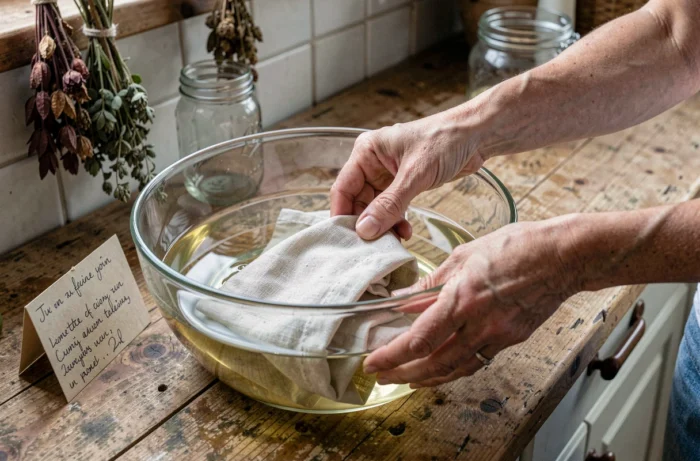
The initial fixation represents only half the work. Poor maintenance degrades a properly fixed print in just a few washes. Turning the garment inside out before putting it in the washing machine limits direct friction on the design. A cold or warm cycle, without intensive spinning, reduces mechanical stress on the ink film.
The dryer is the main enemy of DTF and plastisol prints: repeated high-temperature heat weakens the binder, especially on polyester blends where the film may start to crack. Air drying remains the safest method.
For water-based prints on cotton, waiting at least 48 hours after fixation before the first wash allows the binder time to finish its cross-linking. This delay, rarely mentioned, makes a measurable difference in the longevity of the design.
- Wash inside out, on a delicate cycle, at low temperature
- Avoid the dryer or use it at low temperature only
- Do not iron directly on the printed design: place a thin cloth between the iron and the print
The durability of a textile print depends on a complete chain: choosing the right ink for the substrate, preparing the fabric, strictly adhering to the time-temperature window, and then appropriate maintenance. Neglecting a single link is enough to ruin the result. Before looking for a miracle ink, first check the actual temperature of your press at contact with the fabric: this is where most failures originate.