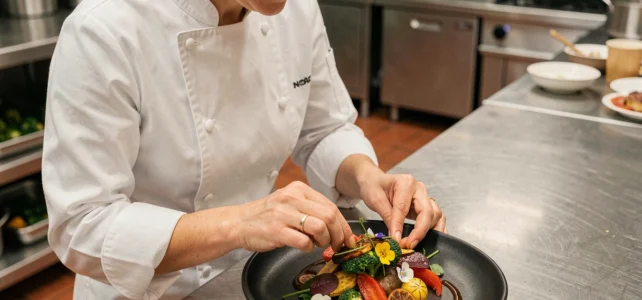
This summer, restaurant menus and gourmet agendas are no longer the same. Formats are changing, venues are reinventing themselves, and the contents of the plate are no longer enough to summarize what is happening around the table. Behind the culinary trends of the season, it is the entire way of experiencing a meal that is transforming.
The meal as a multisensory experience: the real trend of the summer
Have you ever noticed that a dish photographed in an ephemeral setting, accompanied by a playlist or unique lighting, creates a different memory than an identical dish served in a classic setting? This is exactly what restaurateurs and food event creators are capitalizing on this season.
The underlying trend is not about a single ingredient or a viral recipe. It is measured by the proliferation of dinner shows, frozen pop-ups, and ephemeral bars that transform each meal into a staged moment. The dish remains the excuse, but the experience encompasses the location, ambiance, duration, and surprise.
In practice, this results in venues that only open for a few weeks, private courtyards for nighttime tastings, or food courts designed as sensory journeys. To keep up with all the news from À Nos Petits Fourneaux, this type of event format is indeed taking an increasingly prominent place in French culinary news.
This shift from “what” to “how” redefines expectations of conviviality. A meal shared among friends in an unexpected location generates more word-of-mouth than a static gourmet menu.
Pâtés en croûte and pies: the revival of French classics
Among the creations that mark the season, the return of great classics of French cuisine surprises with its scope. It is not mere nostalgia: it is a true technical work on the pastry, filling, and presentation.
The pâté en croûte is experiencing a spectacular revival, driven by a “crust art” logic. Chefs sculpt the pastry, work on the glazes, and play with the visible layers upon cutting. The result resembles both pastry and charcuterie.
Pies follow the same path. Geometric layers, vegetable or mixed fillings, expertly controlled long cooking: these preparations require a know-how that fast cooking had marginalized. Their return on bistronomic menus as well as in professional competitions confirms a lasting movement.
What distinguishes this wave from previous trends
The current versions do not seek museum-like fidelity. They incorporate seasonal products, less expected spices, and sweet-salty combinations. The pie becomes a canvas for creative expression, not a frozen piece of heritage.
This approach also appeals to home cooking enthusiasts. Adapted recipes circulate, with advice on choosing flours, resting times, and pastry sealing techniques.
Artisanal ice creams and fresh cocktails: the star flavors of the season
On the sweet and refreshing side, two categories dominate gourmet conversations this season: artisanal ice creams and revamped cocktails.
- Artisanal ice creams highlight seasonal fruits and bold combinations (basil-strawberry, black olive-lemon, lavender-apricot), with a texture work that goes far beyond simple sorbet
- Non-alcoholic or low-alcohol cocktails are gaining ground in ephemeral bars, featuring homemade infusions, fermented syrups, and very visual presentations
- Cones and containers themselves become design objects, sometimes edible, sometimes reusable, always intended for sharing in photos
Ice creams are no longer just a dessert, but a draw for places that build their entire summer identity around a frozen counter.
Gourmet street food in France: short formats and unexpected locations
Street food has changed its status. What was once perceived as an economical and quick meal has transformed into a fully-fledged gastronomic format, with chefs trained in classical cuisine deliberately choosing the short format.
In Paris and several major cities in France, new generation food courts mix dining, scenography, and cultural programming. You can have lunch in thirty minutes, but the offerings are crafted with as much care as a tasting menu.
What this trend concretely changes
The short format allows for tasting several cuisines in one location. This meets a demand for variety and discovery that no longer necessarily requires reserving a classic restaurant.
- Stands specializing in a single product (one type of taco, a bao, a focaccia) coexist in open halls
- Hours stretch: some places offer continuous service from lunch to aperitif, blurring the boundaries between meals
- The menu evolves weekly based on arrivals, which builds a loyal curious audience
A quick meal becomes an outing in itself, not a compromise due to lack of time.
Plant-based cuisine and local products: a lasting anchoring on plates
Plant-based cuisine is no longer a niche reserved for committed vegetarians. This season, it asserts itself as a creative register that chefs explore without sacrificing indulgence or technique.
Seasonal vegetables occupy the center of the plate. Roasted heirloom tomatoes, zucchini prepared in multiple textures, fresh herbs used as a main ingredient rather than a garnish: the plant stands on its own when the product is good.
The short circuit remains the guiding thread. Menus that mention the name of the farmer or the exact origin are no longer the exception, even outside high gastronomy. This transparency responds to a concrete demand from customers, not a marketing argument.
The culinary trends of this season sketch a landscape where the format matters as much as the content of the plate. Ephemeral venues, reinvented classics, signature ice creams, refined street food, and bold plant-based dishes: each angle reflects a shared desire for meals that stand out from the ordinary without falling into artifice.